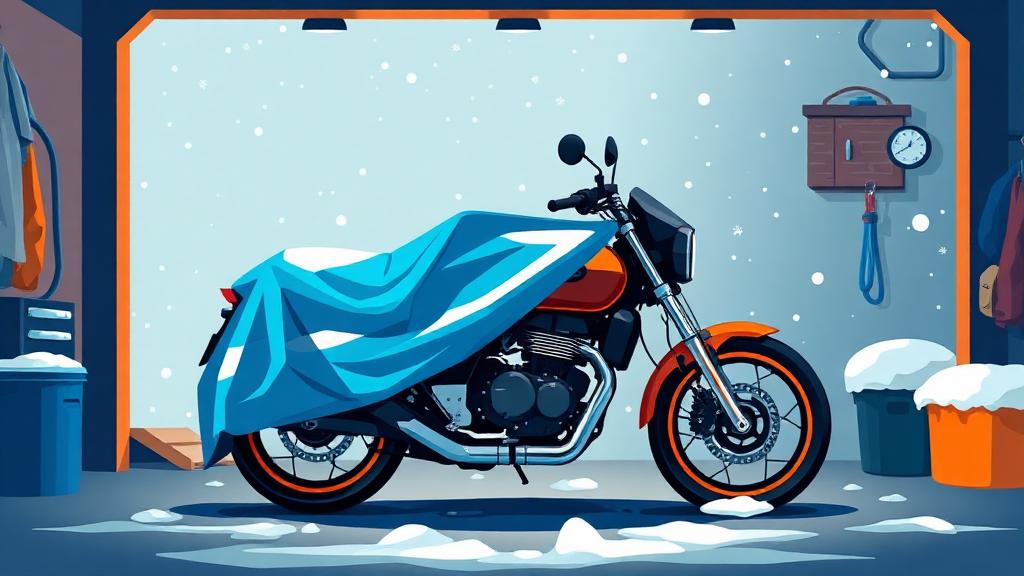
Winter storage is one of the most overlooked parts of motorcycle ownership. Many riders simply park the bike, throw a cover over it, and forget about it until spring — only to discover rust, weak batteries, clogged injectors, flat-spotted tires, and expensive repairs waiting for them.
Preparing your motorcycle properly for winter is not difficult and doesn't require special tools. What it does require is a clear step-by-step process. This guide walks you through everything you need to keep your bike healthy through the cold months and ensure it's ready to ride the moment spring arrives.
Why Winter Storage Matters
Cold temperatures, moisture, and inactivity create the perfect environment for mechanical problems. Even modern motorcycles suffer when left untouched for months.
Common winter damage includes:
- Battery failure
- Rust in the tank
- Corrosion on metal parts
- Clogged injectors or carb jets
- Flat-spotted tires
- Cracked coolant lines
- Frozen coolant in subzero climates
A few hours of preparation can easily save you €200–€1,000 in repairs later (repair costs vary a lot by region and shop — treat these as rough guides).
1. Change the Oil Before You Store the Bike
Old oil contains moisture and combustion acids. When a bike sits for long periods, these contaminants settle inside the engine.
Why fresh oil matters:
- Prevents internal corrosion
- Keeps engine seals lubricated
- Ensures a clean start in spring
Changing oil after winter is worse — the damage is already done.
2. Prepare the Fuel System
Fuel is the #1 thing that goes bad over winter.
For fuel-injected motorcycles
- Fill the tank to the top (reduces condensation)
- Add a fuel stabilizer
- Run the engine for 2–3 minutes to circulate treated fuel
For carbureted motorcycles
You have two options:
- Drain the carbs completely, or
- Add stabilizer and run it through the system
If you don't treat the fuel, expect:
- Hard starts
- Rough idle
- Clogged jets
- High repair bills
3. Care for the Battery (Most Important Step)
Most "my bike won't start in spring" issues are battery-related.
Best method:
- Remove the battery
- Store it indoors
- Connect to a smart charger (CTEK, NOCO, Optimate)
Good method:
- Leave battery on bike
- Use a trickle charger
Bad method:
- Do nothing
A neglected battery sulfates, loses capacity, or dies entirely.
4. Prevent Tire Damage
When a bike sits for months, tires can form flat spots.
Best setup:
- Put the bike on front + rear stands
If you don't have stands:
- Inflate tires to max recommended PSI
- Move the bike slightly every 2–3 weeks
- Place cardboard or carpet under wheels (not cold concrete)
5. Deep Clean the Bike
Moisture + dirt = corrosion.
Clean:
- Chain
- Wheels
- Fork legs
- Under fenders
- Exhaust
- Radiator fins
- Painted surfaces
Finish with:
- Wax on paint
- Silicone spray on rubber parts
- Light corrosion inhibitor spray on exposed metal
A clean bike survives winter much better than a dirty one.
6. Lubricate All Moving Parts
Apply lubrication to:
- Chain
- Pivots
- Cables
- Side stand and center stand
- Clutch and brake levers
Moisture causes rust — lubrication prevents it.
7. Check & Protect the Coolant
If you live in a region where temperatures drop below freezing:
- Make sure your coolant has the correct antifreeze ratio
- Replace coolant if it's old or unknown
Frozen coolant expands and can crack:
- Radiators
- Hoses
- Water pump housings
A 10-minute check can prevent a repair that easily runs €300 or more, depending on your shop and region.
8. Protect Against Rodents
This is a real issue — especially in garages.
Rodents love:
- Warm engines
- Airboxes
- Fairing cavities
- Wiring harnesses
How to prevent damage:
- Put peppermint oil on cotton balls around the bike
- Place traps away from the motorcycle
- Keep food out of the garage
- Seal openings where mice enter
They can destroy wiring looms — a nightmare repair.
9. Decide on the Right Cover
The best cover depends on your storage environment.
Indoors:
- Use a breathable motorcycle cover
- Never use a plastic tarp — it traps moisture
Outdoors:
- Use a weatherproof breathable cover
- Avoid placing the bike under trees
- Use a ground sheet to reduce moisture
10. Choose the Best Storage Location
Ideal locations:
- Heated garage
- Climate-controlled storage
- Basement
- Professional winter storage facility
Bike should be stored:
- Away from fertilizer (corrosive)
- Away from paint cans (emit vapors)
- Away from windows with condensation
11. Spring Wake-Up Procedure
When warm days return:
1. Remove charger
2. Check tire pressure
3. Inspect brakes
4. Check oil level
5. Start the bike and let it idle
6. Look for leaks
7. Take a slow test ride
8. Lube the chain again
Your motorcycle should feel like it never slept.
Conclusion
Winter storage is not complicated — it's a checklist. Follow it once and your motorcycle will stay:
- Clean
- Rust-free
- Ready to start
- Safe to ride
- Preserved for years
A little preparation now gives you a perfect riding season later.