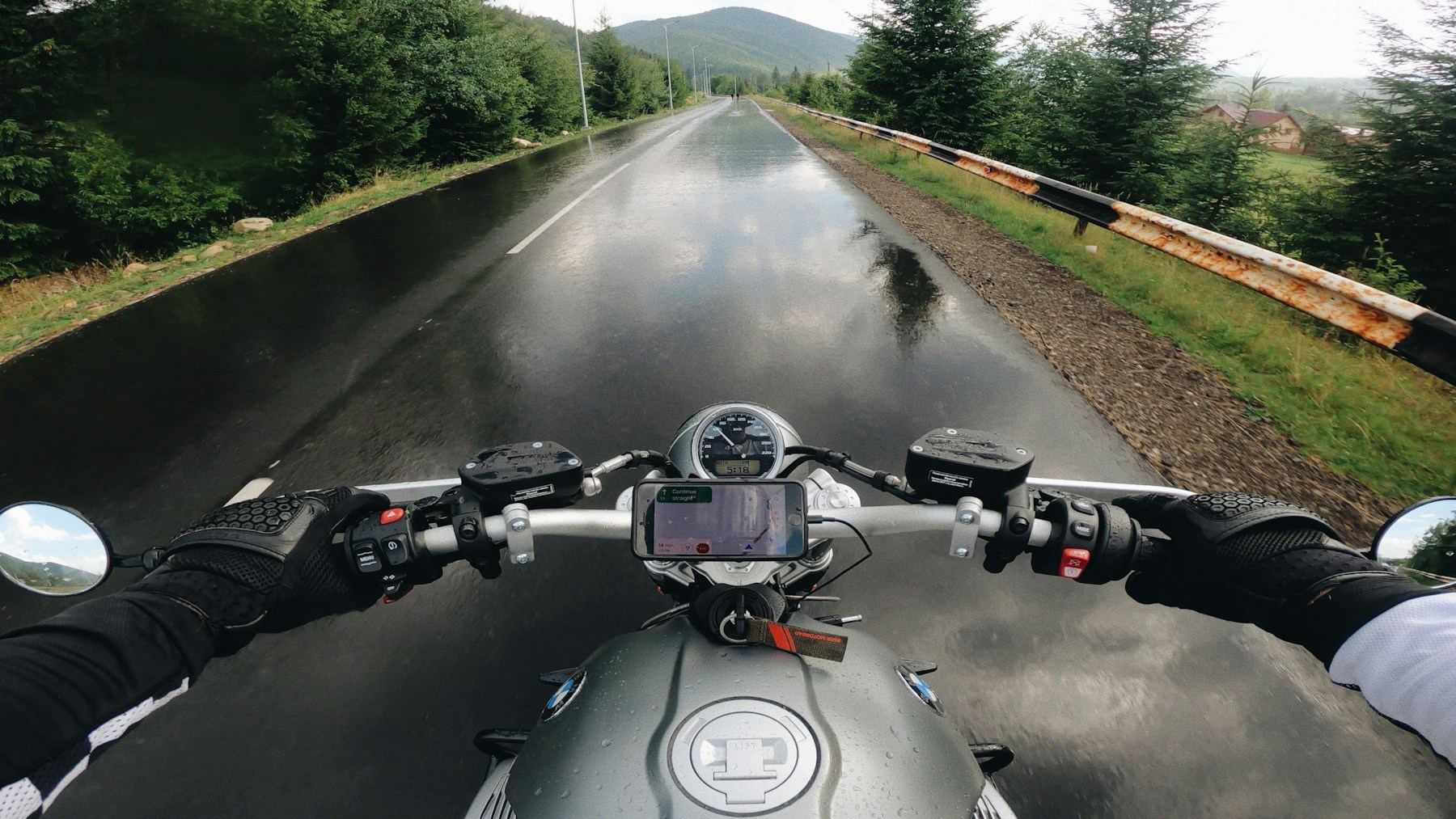
Rain changes more than tyre grip. Spray reduces visibility, water hides surface defects and cold wet gear accelerates fatigue. The safest wet-weather plan is therefore not one special riding trick; it is more space, earlier decisions, smooth control inputs and a clear point at which you stop.
Before riding into rain
Check the route-level forecast and current road warnings, then put the waterproof layer on before visibility and roadside space deteriorate. Confirm that the visor is clean, lights work and luggage closures are sealed. Keep rain gear, warm layer and dry gloves accessible without unloading the motorcycle.
There is no reliable universal rule that the road becomes safe after a fixed number of minutes. Early rain can lift oil, fuel and debris from the surface, but traffic, drainage, road material and the length of the preceding dry period all matter. Continue to treat junctions, fuel stations, lane markings and visible rainbow-coloured spills as local hazards after steady rain begins.
Create space before changing technique
The UK Highway Code says wet-weather stopping distances will be at least double those on a dry road and advises at least doubling the normal following gap. That is a useful minimum planning rule, not a promise that every motorcycle will stop within a particular distance.
- Reduce speed before the hazard rather than braking or steering abruptly on it.
- Increase the following gap until spray no longer hides the road surface ahead.
- Keep an escape route instead of riding beside another vehicle.
- Avoid pressure from a rider behind; let them pass when a safe opportunity appears.
- If visibility is shorter than the distance needed to stop, reduce speed further or leave the road safely.
Throttle, braking and cornering
The Motorcycle Safety Foundation advises smooth speed changes on slippery surfaces and use of both brakes. Begin braking earlier, build pressure progressively and complete the strongest braking while the motorcycle is upright. ABS can help prevent wheel lock, but it does not create grip or guarantee a shorter stop.
Choose a corner-entry speed that leaves capacity for an unexpected wet patch. Keep steering and throttle changes progressive, look through the bend and avoid adding lean merely to preserve a dry-road pace. A larger safety margin matters more than following a rigid instruction to use a particular lane line.
Crossing a slippery strip
Where practical, reduce speed beforehand, keep the motorcycle nearly upright and cross paint, metal or a repair seam with minimal acceleration, braking and steering. Do not make a sudden swerve into traffic merely to avoid a small surface feature.
Read the surface
- Standing water: may conceal potholes and can separate the tyre from the road. Slow before reaching it; do not make an abrupt input while crossing.
- Diesel or oil: look for a rainbow sheen, especially near junctions, bus routes and filling stations. Avoid the contaminated area if this can be done smoothly.
- Paint and metal: markings, inspection covers, bridge joints and gratings may offer less wet grip than surrounding asphalt.
- Leaves and mud: can hide the road texture and move under the tyre.
- Road works: expect loose material, temporary markings, standing water and abrupt surface changes.
If the steering becomes light or unresponsive in standing water, hold a steady direction and ease off the throttle so speed reduces gradually. Avoid hard braking or a sharp steering correction. Leave the road at the next safe location and reassess if water depth or drainage cannot be judged.
Tyres, pressure and the loaded motorcycle
Use the pressure specified for the motorcycle, tyres and load. Do not lower road-tyre pressure simply because it is raining. Check pressure when the tyres are cold, inspect tread and damage, and replace a tyre according to legal limits and the manufacturer’s instructions rather than relying on a generic wet-weather number.
Touring luggage changes load and handling in both dry and wet conditions. Secure it before departure and recheck straps after the first stop. Our road-trip planning guide includes a loaded shakedown and T-CLOCS inspection.
Visibility and waterproof clothing
A clean clear visor is normally more useful than a dark visor in rain. Use only visor treatments approved for its material and coating. If misting cannot be controlled through the helmet’s intended ventilation or anti-fog system, stop somewhere safe to restore clear vision.
Waterproof gear should preserve warmth and control movement, not restrict the rider. Check the collar, glove and boot overlaps while seated on the motorcycle. A one-piece or two-piece oversuit can work well when correctly sized; laminated and drop-liner garments manage water differently, but no construction compensates for damaged seams or open vents.
Lights, reflectors and clean high-contrast gear can help others detect the rider, but never assume that visibility clothing means a driver has seen you. Stay out of blind spots and create extra space around turning or merging vehicles.
Thunderstorms are a stop condition
A motorcycle is not safe lightning shelter. The US National Weather Service advises motorcyclists to enter a substantial enclosed building or a hard-topped enclosed vehicle and wait at least 30 minutes after the last thunder before resuming. Tents, picnic shelters, open garages and isolated trees are not safe substitutes.
Plan the shelter before the storm reaches the route. If thunder is already audible, do not continue across an exposed ridge in the hope of reaching the far side.
When to stop riding
- You cannot see far enough to stop within the visible clear road.
- Standing water spans the lane and its depth or surface cannot be judged.
- Lightning is present and safe enclosed shelter is available.
- Cold, wet hands can no longer operate the controls accurately.
- Wind, spray or fatigue makes it difficult to hold a stable course.
Choose a service area, parking area or another place separated from moving traffic. A motorway shoulder is not a rest area. Resume only when the limiting condition has changed—not merely because the schedule is slipping.