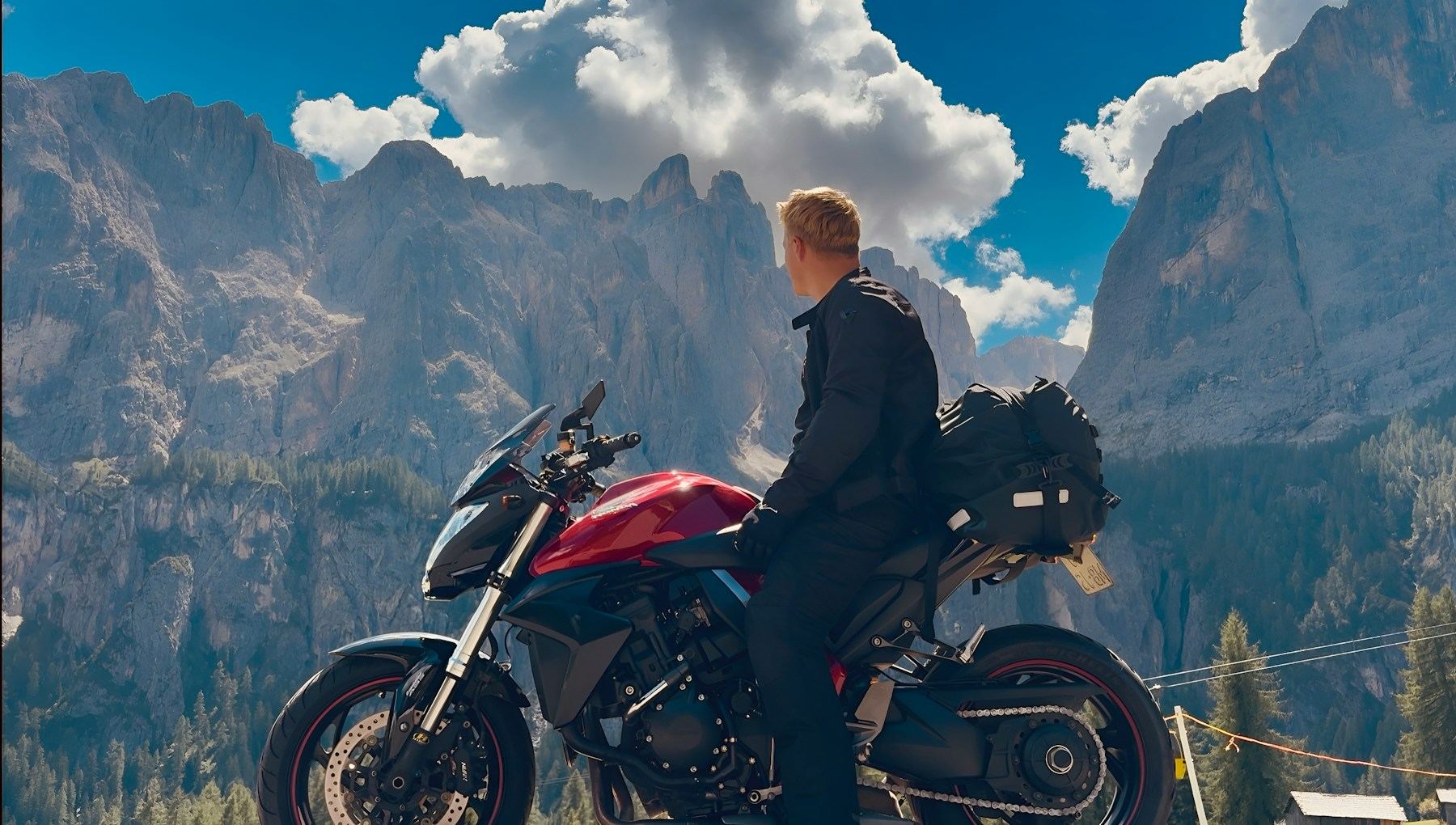
From the legendary Stelvio to the cliffs of Amalfi—your complete guide to riding la bella Italia
May–October
Best Season
Right Side
Driving Side
Seasonal
High Alpine Passes
Check Signs
ZTL Access
Why Italy Is a Motorcyclist's Dream
Italy combines several distinct kinds of touring in one country: seasonal Alpine passes in the north, lower Apennine roads through the centre and densely settled Mediterranean coast roads in the south. Ducati, Aprilia and Moto Guzzi add genuine motorcycle heritage, but the practical appeal is the variety between regions.
The eastern Stelvio approach has 48 numbered hairpins, while the official Bormio loop continues over Umbrail and returns through Val Müstair. In the Dolomites, the Sella Ronda connects four passes in about 55 km. Farther south, the riding is less about altitude and more about hill towns, traffic and coastal roads.
Italy also demands planning. Historic centres use camera-controlled ZTL restricted zones, fuel stations may be unattended during midday breaks, and access rules vary by municipality. This guide focuses on the checks a visiting rider should make rather than quoting fine or fuel prices that quickly become outdated.
Riding Rules & Regulations
Speed Limits
- Urban areas: 50 km/h
- Secondary roads: 90 km/h
- Main roads (superstrade): 110 km/h
- Motorways (autostrade): 130 km/h (reduced to 110 km/h in rain)
⚠️ Speed cameras (Autovelox) are everywhere. Fines arrive months later at your home address. Italian speed limits are strictly enforced, especially on autostrade where the Tutor system measures average speed between points.
Headlights: Mandatory at all times outside urban areas, day and night.
Helmet: Required. Must be ECE approved. Authorities can impound your bike for violations.
Reflective vest: Recommended for breakdowns and poor visibility. The standard equipment rule cited for cars should not be presented as a blanket motorcycle carrying requirement.
License: EU/EEA licences are generally recognised. Requirements for licences issued elsewhere depend on the issuing country and the applicable convention, so confirm whether an International Driving Permit or official translation is required before travel.
Blood alcohol limit: 0.05% (0.0% for riders with less than 3 years experience or under 21).
Lane filtering: Do not treat filtering as an express legal entitlement. Italian rules require riders to maintain lane discipline and make safe overtakes; local practice is not the same as clear permission.
ZTL Zones: Italy's Biggest Gotcha
⚠️ Zona Traffico Limitato
ZTL zones are restricted traffic areas in historic city centers. Cameras photograph every vehicle entering. If you're not registered, you'll receive fines that are often in the €80-100 range per entry—often weeks or months later. Exact amounts vary by city and change over time, so treat these as ballpark figures.
- How to spot them: White circular signs with a red border reading "ZTL" or "Zona Traffico Limitato"
- Active times: Many are only active during certain hours (often 7:30-19:30). Check signs carefully—times are posted below
- Major cities: Florence, Rome, Milan, Bologna, Siena, Verona, and most historic towns have ZTL zones
- Motorcycles: Often allowed during certain hours—but rules vary by city. When in doubt, park outside
Practical rule: Park outside the historic centre unless your accommodation has confirmed both that motorcycles are allowed and that it will register your plate. Do not follow another vehicle through a camera gate; the access shown on its permit may not apply to you.
Best Time to Ride Italy
June & September
Often the best balance of temperature and traffic, but no month guarantees that every high pass will be open. Check each pass shortly before departure.
July & August
Hot in the south (35°C+), but ideal for high Alpine passes. Crowded everywhere—book accommodation early.
May & October
Shoulder season. Some high passes may have snow. Fewer crowds, lower prices, unpredictable weather.
Regional Timing
- Stelvio & Dolomites: Summer roads with snow-dependent opening and closing dates; individual sides can open at different times
- Tuscany & Umbria: March–November. Spring is stunning with wildflowers
- Amalfi Coast: April–June or September–October. Summer is hot and packed
- Sicily & Sardinia: October–June ideal. July/August can exceed 40°C
Fuel Stops & Services
Italian Fuel Stations
- Prices: Pump prices move constantly. Compare the displayed self-service and attended prices before fuelling
- Types: "Benzina" (95 octane) is standard. "Super" or "Plus" (98 octane) available at larger stations
- Self-service vs. attended: "Fai da te" is self-service (cheaper). "Servito" is full service (staff fills your tank)
- Payment: Most accept cards. Some rural stations are cash-only
⏰ The Italian Lunch Break
Many staffed rural stations close around lunch. Automated pumps may remain available, but foreign cards and pre-authorisation can be inconsistent. Carry more than one payment method and refuel before entering remote mountain sections.
Mountain passes: Limited fuel on high passes. Fill up in valleys—Bormio before Stelvio, Bolzano before Dolomites.
Autostrada services: Called "Autogrill"—excellent for coffee and food, but pricey for fuel. Shell, Eni, Q8, and IP are major brands.
Toll Roads (Autostrade)
Much of the Italian motorway network is tolled. On the Autostrade per l'Italia network, motorcycles fall into the two-axle Class A calculation; the final charge depends on distance, concession and whether the section is classified as flat or mountain. Use the operator's current calculator when budgeting.
Payment Options
- Cash lanes: Look for "Contanti" or white signs. Have coins and small bills ready
- Card lanes: Look for card symbols. Insert card after stopping
- Telepass: Automatic payment device. Worth it for extended Italian tours—no stopping at booths. Can rent from autostrade.it
- VIA Card: Prepaid toll card available at service stations and tobacconists
Toll-free alternatives: Many riders avoid autostrade entirely. The SS (Strada Statale) and SP (Strada Provinciale) roads are toll-free and far more scenic—though slower.
Notable toll tunnels: Mont Blanc and Fréjus use separate tariffs and restrictions that change over time. Check the tunnel operator directly; do not assume the ordinary motorway class or an old online price applies.
Road Conditions & Riding Style
Road Quality
- Autostrade: Built for high-speed traffic, but construction zones and congestion remain common
- Main roads (SS): Quality varies by section; watch for patched surfaces and changing limits
- Mountain passes: Expect winter damage, repair gravel and wet tunnel exits early in the season
- Local roads: Surface and width can change abruptly, especially after storms or maintenance
- Islands: Verify the exact route rather than assuming every minor road matches the main network
Italian Driving Style
- Assertive: Italians drive with confidence. Hesitation confuses them
- Lane discipline: Flexible interpretation. Expect overtakes from any direction
- Mountain roads: Local drivers know every corner—give way if pressured
- Motorcyclists: Generally respected. You'll get nods and waves from other riders
- Horn usage: Common and not aggressive—often just "I'm here"
Must-Ride Routes in Italy
The classic eastern ascent has 48 numbered hairpins and reaches 2,758 metres. The Bormio side has a different, more open character. Go early, check both approaches are open and account for scheduled cycling closures.
Four passes in a 55km loop around the Sella massif—Gardena, Campolongo, Pordoi, and Sella. UNESCO World Heritage scenery and some of the best road surfaces in Europe. Allow a full day; you'll stop constantly for photos.
A roughly 50km cliff road (SS163) carved above the Tyrrhenian Sea. Tight tunnels, blind corners, buses coming the other way—it demands attention. But those glimpses of Positano and Ravello from the saddle are unforgettable. Ride early or late to miss coach traffic. Heads up: in peak summer the coast often runs "targhe alterne"—on some days only odd- or even-numbered plates may drive the SS163, and this has applied to motorcycles too. Check the current dates and any exemptions before you go.
Not about hairpins but about flow—rolling hills, cypress-lined roads, vineyards, and medieval villages. Perfect for a leisurely day ride with long lunches. The SR222 from Florence to Siena is the classic route.
Lakeside roads, tunnels, ferries and dense villages make this a scenic but traffic-heavy touring day. The revised Como–Lugano circuit uses ordinary roads and a central-lake vehicle ferry; check the timetable and avoid Swiss motorways unless you have the required vignette.
Coffee, Food & the Italian Riding Day
The Italian Coffee Stop
Italian bars are practical rider stops: order and pay at the counter, confirm whether table service is priced differently, and keep valuables with you when the bike is loaded.
- "Un caffè": An espresso. The default.
- "Caffè lungo": Longer espresso—closer to what you might call "normal" coffee
- "Cappuccino": Acceptable in the morning only (Italians consider it a breakfast drink)
- "Macchiato": Espresso with a splash of milk
Lunch strategy: Italians eat lunch 12:30-14:30. Everything shuts down. Either eat when they do, or carry snacks and ride through the empty roads while everyone else eats.
Mountain huts (rifugi): The Dolomites have excellent rifugi at pass summits. Hot food, cold beer, stunning views. Don't ride Italy's mountains without stopping at at least one.
Evening aperitivo: Many bars offer free snacks with evening drinks (17:00-20:00). A Spritz Aperol and nibbles make a perfect end to a riding day.
Frequently Asked Questions
When does Stelvio Pass open?
Usually late May or early June, closing in late October or early November—exact dates depend on snow clearing and can shift year to year. The Bormio (south) side typically opens first. Always check current road-status and pass webcams (the local Bormio/Stelvio and South Tyrol road authorities post updates) before setting off.
How do I avoid ZTL fines?
Use a GPS app updated with ZTL zones (Waze does this well), park outside historic centers, and look for the white circular signs with red borders. If you accidentally enter, leave immediately—cameras photograph entry and exit, and staying longer doesn't add fines.
What bike suits Italy best?
For Alpine passes: any sport-tourer or naked bike works well. For southern roads and gravel: an adventure bike helps. For cities and coast: something smaller is easier to park and filter. The Italian classics—Ducati Multistrada, Moto Guzzi V85—suit the terrain perfectly.
Is filtering legal?
Italian traffic practice should not be confused with an explicit legal permission to filter. Use marked lanes, overtake only where lawful and safe, and do not copy local scooters through gaps you cannot assess.
How's the fuel availability in the mountains?
Limited on high passes themselves. Fill up in valley towns: Bormio, Livigno, Bolzano, Cortina d'Ampezzo. Most passes can be combined into loops of 200km or less, manageable for any tank size.
Should I take ferries to Sicily or Sardinia?
Absolutely worth it. Sicily (ferry from Villa San Giovanni) is a short crossing and opens up incredible riding. Sardinia requires overnight ferries from Genoa, Livorno, or Naples—book early in summer. Both islands have exceptional roads.
Official planning sources
Explore More
Final Thoughts
Italy isn't just about the roads—though roads like Stelvio would be worth the trip alone. It's about the whole experience: the morning espresso before dawn starts, the rifugio lunch at 2,500m, the evening passeggiata through a hilltop town.
Italian drivers will surprise you, ZTL zones will try to trap you, and the three-hour lunch break will occasionally frustrate you. But when you're leaned over on a perfect mountain switchback with the Dolomites glowing pink in the evening light, none of that matters. This is why we ride.