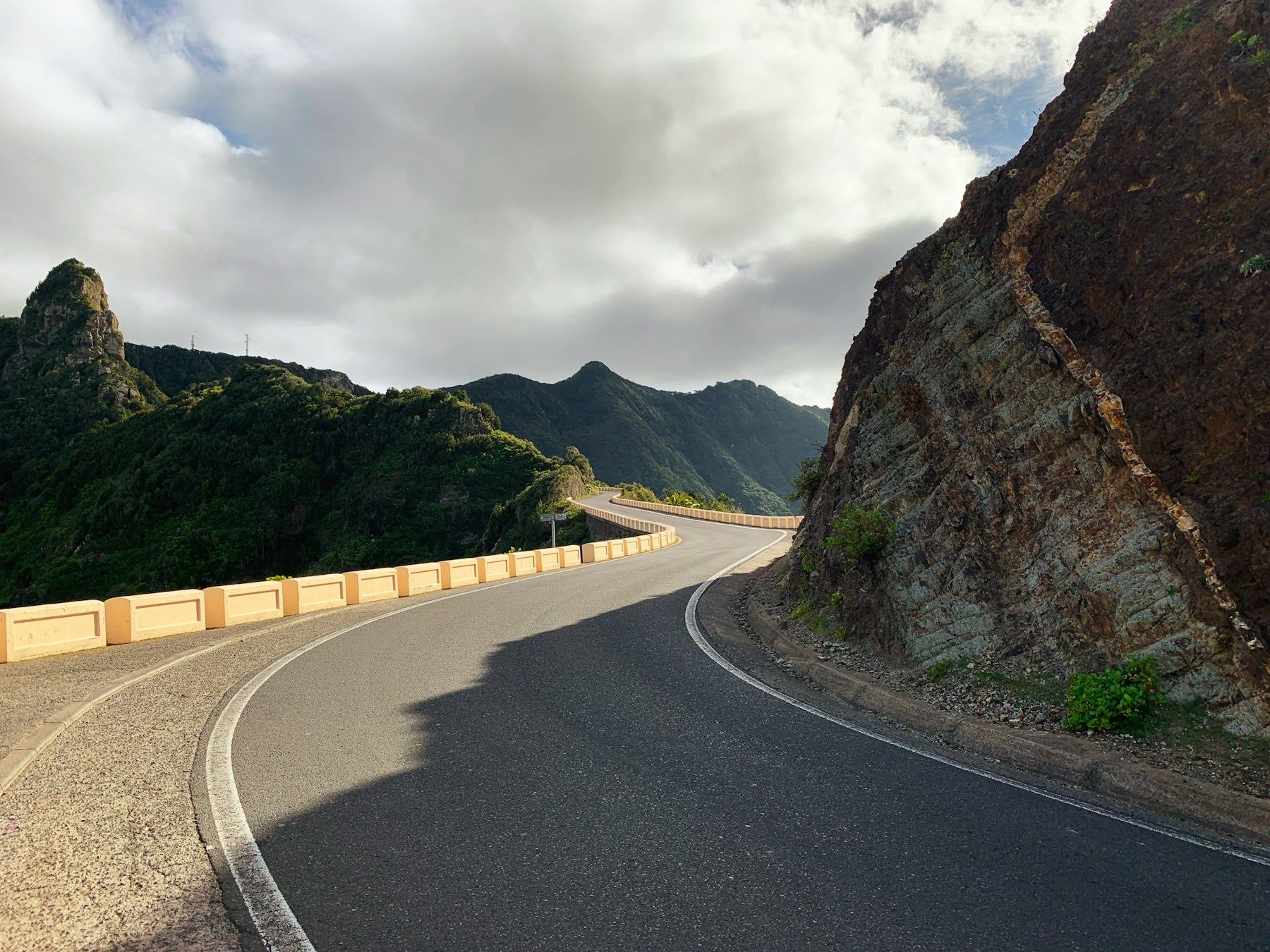
Sun-soaked roads from Pyrenees peaks to Mediterranean coasts—your complete Spanish riding guide
Mar–Jun, Sep–Nov
Best Season
Right Side
Driving Side
Check Live
Fuel Prices Vary Weekly
Highly Regional
Climate & Riding Season
Why Spain Is a Motorcyclist's Dream
Spain offers an unusually broad range of riding within one country. Fuel, accommodation and traffic vary by region and season, but the geographic variety is exceptional—from the high Pyrenees to the dry landscapes of Almería, from Atlantic Galicia to the subtropical Canary Islands.
The Spanish have built some remarkable mountain roads: the N-260 threading the Pyrenees, the AS-114 through the Picos de Europa's gorges, the serpentine descents to Andalusia's white villages. These roads were engineered for traffic, not tourists, which means they flow beautifully rather than posing for photos.
The touring rhythm is different too. Lunch commonly starts later than in northern Europe, while smaller businesses may close during the afternoon. Plan fuel and food around the region you are crossing rather than assuming every rural station keeps city hours.
Riding Rules & Regulations
Speed Limits
- Built-up areas: 30 km/h is now the default on most single-lane-each-way city streets (since the 2021 reform); 50 km/h on urban roads with two or more lanes per direction, 20 km/h where roadway and pavement share one level
- Conventional (non-motorway) roads: 90 km/h—since the 2019 reform this single limit applies; the old 100 km/h category was scrapped
- Motorways (autopistas/autovías): 120 km/h
⚠️ Spain has extensive fixed and mobile radar networks. Guardia Civil traffic police are professional but enforce strictly. Speeding fines are significant (commonly in the low hundreds of euros, more for serious cases—check current DGT rates) and non-residents must often pay on the spot or leave a deposit.
Headlights: Motorcycles must ride with dipped headlights on at all times, day and night, everywhere.
Helmet: Required for all riders and passengers. Must be approved (ECE 22.05/06).
Reflective vest: The legal carry/wear obligation applies to cars and vans rather than motorcycles, but a hi-vis vest is strongly recommended—wear it if you stop roadside outside urban areas.
Gloves and footwear: Spain's June 2026 traffic-rule update made protective gloves compulsory for riders and passengers on interurban roads, and closed footwear compulsory on all roads.
Glasses: A spare pair is sensible but is not a general legal requirement. Your licence may still require corrective lenses while driving.
Blood alcohol limit: The current general limit remains 0.5 g/L in blood (0.3 g/L for novice and professional drivers). A proposal to reduce it to 0.2 g/L was still pending in September 2026. The only safe riding limit is zero.
Congestion: The 2026 rules allow motorcycles to use the right shoulder at up to 30 km/h only on specifically signposted congested sections. Do not treat this as a general filtering permission.
Radar detectors: Illegal. Apps showing fixed camera locations are permitted.
Low-emission zones (ZBE): Madrid, Barcelona and a growing list of Spanish cities (all municipalities over 50,000 people are required to have one) now run Zonas de Bajas Emisiones. Older and non-registered vehicles—including some pre-Euro 3 motorcycles (Barcelona restricts bikes registered before 2003)—can be barred or need to register in advance. Foreign-registered vehicles usually have to register too. If you'll ride into a big-city centre, check that city's ZBE rules before you enter.
Best Time to Ride Spain
Spring (March–June) & Autumn (September–November)
- ✓ Perfect temperatures (18-28°C)
- ✓ Pyrenees and mountains accessible
- ✓ Fewer tourists than summer
- ✓ Green landscapes (spring)
- ✓ Harvest colors and wine festivals (autumn)
Summer (July–August)
- ✓ Guaranteed good weather
- ✓ All passes open
- ✗ EXTREMELY hot in south/center (40°C+)
- ✗ Crowded coastal areas
- ✗ Higher prices everywhere
Regional Timing
- Pyrenees: May–October. High passes (Portalet, Somport) usually open by May
- Picos de Europa: April–November. Can be cool and wet even in summer
- Andalucía: October–May. Summer (40°C+) is unbearable in full gear
- Central Spain (Castilla): March–June, September–November. Continental extremes—very cold in winter, scorching in summer
- Mediterranean coast: Year-round, but avoid July–August crowds
- Canary Islands: Year-round. Eternal spring climate (20-25°C)
Fuel Stops & Services
Spanish Fuel Network
- Prices: historically around €1.45-1.65/liter and among the cheapest in Western Europe—but pump prices move constantly, so check current rates before you budget
- Brands: Repsol, Cepsa, BP, Galp. Supermarket stations (Carrefour, Eroski) cheapest
- Types: "Gasolina 95" (standard), "Gasolina 98" (premium). E10 becoming more common
- Payment: Card widely accepted. Some remote stations may require PIN or cash
- Opening hours: Major routes have 24/7 stations. Rural areas may close evenings/weekends
💡 Pro Tip: Andorra
The tiny Pyrenean nation of Andorra usually has some of the cheapest fuel in the region (recently around €1.25-1.40/liter, but check current prices). If you're riding the Pyrenees, detour through Andorra to fill up. It's also duty-free for tobacco, alcohol, and electronics.
⛽ Remote Area Planning
- • Pyrenees: Fill in valley towns (Vielha, Sort, Puigcerdà)—passes have no fuel
- • Picos de Europa: Fill in Cangas de Onís or Potes before mountain roads
- • Almería desert: Sparse stations—don't run low in the badlands
- • Extremadura: Long empty stretches—fuel when you can
Toll Roads & Alternatives
✓ Great News: Most Motorways Are Free
Spain has converted most toll roads (autopistas) to free motorways (autovías). The extensive motorway network from Madrid is now largely toll-free. Only a few privately-operated sections remain tolled.
Remaining Toll Roads
- AP-7 (Catalonia): the Barcelona–La Jonquera/French border section became toll-free in 2021 when its concession expired—it is now free
- AP-68: Bilbao–Zaragoza—still tolled
- AP-6/AP-51/AP-61: Madrid–Segovia/Ávila mountain crossings—still tolled
- AP-9 (Galicia), AP-66 (León–Asturias): still tolled
- Tunnels: Some tunnel bypasses (Cadí, Vallvidrera) are tolled
- Motorcycles: On most Spanish autopistas bikes pay a reduced rate compared with cars (varies by operator). Exact tolls change—check current rates
Tip: The free alternatives (N-roads) are often more scenic anyway. GPS set to "avoid tolls" usually finds excellent routes. The coastal N-340/N-332 along the Mediterranean is more interesting than the motorway, for example.
Must-Ride Routes in Spain
The spine of the Spanish Pyrenees, running 290km from Mediterranean to Atlantic. Crosses multiple passes, threads gorges, and offers constant mountain drama. Less traffic than the French side, more technical, equally beautiful. Allow 2-3 days to do it properly.
The "Little Alps" of northern Spain. The N-621 through the Desfiladero de La Hermida—Spain's deepest gorge—is jaw-dropping, road threaded between sheer cliffs (the famous Cares Gorge itself is a walking trail, not a road). Combine it with the Liébana Valley for a spectacular loop. Often overlooked by foreigners heading to the Pyrenees—their loss.
Whitewashed hill villages connected by twisting roads through olive groves and mountains. The A-372/A-373 loop from Ronda through Grazalema is the classic route. Empty roads, stunning villages, and some of the best food in Spain. One quirk: the Sierra de Grazalema is the wettest spot in Spain, so it can catch sudden rain and mist even when the rest of Andalucía is bone dry—pack a layer. Best September–May.
The passes around Andorra—Port del Comte, Coll de la Creueta, Port de Cabús—offer fantastic Pyrenean riding without the crowds of the main routes. Combine with cheap Andorran fuel and a night in the duty-free capital. Technical roads, big views.
Sierra Nevada & Alpujarras
Europe's most southerly ski resort meets Moorish mountain villages. The A-4132 through the Alpujarras is beautifully empty. The road to Veleta (3,392m) is the highest paved road in Europe—though often closed above 2,500m. Spring and autumn only for the high roads.
The MA-10 along Mallorca's northwestern coast—a 90km ribbon of hairpins, tunnels, and Mediterranean views. Sa Calobra is the famous descent: 12km, 26 hairpins, 800m drop. Take your bike on the ferry from Barcelona or Valencia.
Riding the Spanish Schedule
Spanish Mealtimes = Empty Roads
Spanish eating habits are a rider's secret weapon. While everyone else eats lunch (14:00-16:00), the roads are deserted. Plan accordingly.
- Breakfast (desayuno): 8:00-10:00. Coffee and toast ("tostada con tomate") at any bar
- Lunch (almuerzo/comida): 14:00-16:00. Main meal of the day. "Menú del día" offers 3 courses for €12-18
- Siesta: Many shops close 14:00-17:00. Fuel stations usually stay open
- Dinner (cena): 21:00-23:00. Lighter than lunch
- Tapas: Available all day, but peak time 19:00-22:00
My routine: Early start, ride through morning, picnic lunch on a scenic viewpoint while Spain eats, more riding through the empty afternoon, arrive at destination by 18:00, evening tapas, bed early, repeat.
Summer heat strategy: Start at dawn, ride until 14:00, find a shaded terrace and wait out the worst heat, resume riding after 18:00. The light is best in evening anyway.
Where to Stay
Paradores: Historic state-run hotels in castles, monasteries, and palaces. €100-200/night but unforgettable locations. Many offer motorcycle parking. Book at parador.es.
Hostales: Spanish guesthouses (not hostels). Clean, basic, cheap (€30-60). Often above restaurants with secure courtyard parking.
Casas rurales: Rural B&Bs, often in converted farmhouses. Great for quieter mountain areas.
Camping: Well-equipped sites across the country, €15-25/night. Wild camping tolerated if discreet (not on beaches or near buildings).
Booking tip: August is Spanish vacation month—book ahead for popular areas. Rest of year, you can usually find rooms on arrival.
Frequently Asked Questions
How hot does it really get in summer?
Very hot. Andalucía and central Spain regularly exceed 40°C in July/August. Riding in full gear becomes genuinely dangerous. The north (Galicia, Asturias, Basque Country) stays cooler (25-30°C) and is excellent in summer. Mountain areas are comfortable.
Are Spanish drivers dangerous?
No more than anywhere else. Spanish drivers are generally courteous to motorcyclists. Rural roads have little traffic. Cities (Madrid, Barcelona) are busy but not aggressive. Watch for elderly tractors on mountain roads.
What about Gibraltar and the ferry to Morocco?
Gibraltar is a fun novelty visit (British territory, drive through the airport runway). Ferries to Morocco run from Algeciras and Tarifa—easy to take your bike across for Moroccan adventures. Allow extra paperwork time at both borders.
Is the N-260 as good as they say?
Yes. The full Portbou–Irun route is one of Europe's great motorcycle roads. Less traffic than the French side of the Pyrenees, excellent surfaces, constant mountain scenery. Budget 2-3 days minimum, more if you want to explore side valleys.
Should I visit the Canary Islands?
Absolutely, especially in winter. Tenerife has the TF-21 up Mount Teide (3,715m volcano), Gran Canaria has amazing mountain roads, Lanzarote has otherworldly volcanic landscapes. Ferries between islands take bikes. Flights from mainland are cheap; bike rental available on all major islands.
What's the Guardia Civil like?
Professional and fair. They patrol mountain roads regularly. If stopped, be polite and have documents ready. Non-resident fines may require immediate payment or a deposit—carry some cash. They're strict on speeding but generally motorcycle-friendly.
Explore More
Final Thoughts
Spain combines high mountain passes, quiet inland roads, long coastlines and a touring season that shifts with latitude and altitude. Costs and traffic are no longer uniformly low, especially in major resorts, but careful route timing still delivers excellent riding value.
The riding is excellent, but it's the lifestyle that makes Spain special. The two-hour lunches that become three-hour conversations. The evening tapas runs. The impromptu local festivals that block roads and make detours into discoveries. Spain doesn't hurry, and neither should you. The best Spanish road trips are the ones where you throw away the itinerary and see where the road leads.