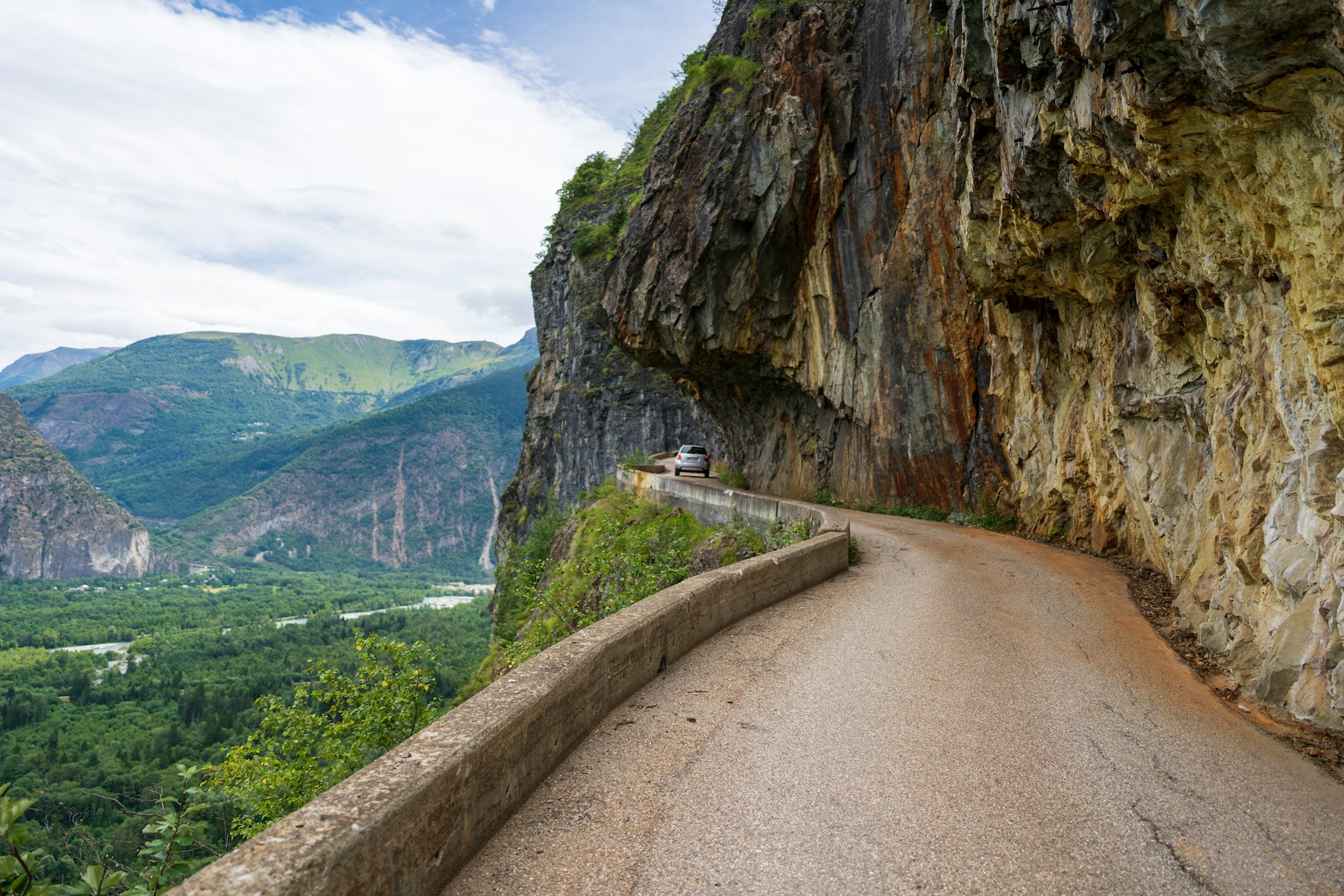
Europe does not have one “best” motorcycle road. It has several distinct riding regions that suit different bikes, seasons and trip lengths: high Alpine passes, dry Spanish mountain roads, crowded Mediterranean cliff routes and long Norwegian fjord itineraries. The useful question is not which road wins a ranking, but which group of roads works together as a safe, realistic tour.
This guide prioritises routes with a defined start and finish, current planning sources and enough nearby alternatives to survive a closure or bad-weather day. Distances and opening patterns were reviewed on 17 September 2026, but live road status, national rules and event closures must still be checked immediately before riding.
Choose a region before choosing individual roads
The Alps: concentrated pass riding
Choose the Alps for technical bends, high elevation and short distances that take longer than the map suggests. Italy, Switzerland, France and Austria can be combined, but every border introduces different toll, vignette and equipment rules. The practical season is normally summer, with no guaranteed opening date for the highest roads.
Northern Spain: longer flowing days
The Picos de Europa and central Pyrenees provide longer connected roads than most Alpine passes. Spring and autumn can work well at lower elevations, while winter weather still affects high Pyrenean sections. Spain is the strongest choice here for riders who want several full days without buying multiple national vignettes.
Mediterranean coasts: scenery with traffic
The Amalfi Coast and Costa Brava are visually strong but should not be treated as empty cornering roads. Villages, buses, cyclists, parking queues and seasonal restrictions make an early start and modest daily distance more valuable than a powerful motorcycle.
Norway: distance, ferries and weather
Norway is the choice for fjords, coastal exposure and long daylight rather than rapid country-hopping. Ferry schedules and seasonal mountain roads shape the itinerary. Allow reserve days and avoid calculating progress from speed limits alone.
Ten European motorcycle routes worth planning around
1. Route des Grandes Alpes, France
The official classic route covers roughly 720 km from Thonon-les-Bains to Nice. It crosses a sequence of high roads rather than one continuous pass, so snow, rockfall or events can force an official variant. Our Route des Grandes Alpes guide divides the journey into four practical stages instead of presenting it as a single endurance day.
2. Furka–Grimsel–Susten triangle, Switzerland
This Andermatt-area circuit combines three very different roads: exposed Furka, reservoir-lined Grimsel and the more engineered curves and tunnels of Susten. Each pass opens independently. If one closes, the triangle breaks and the alternative can be much longer than the original loop. Check Canton Uri’s live pass report before leaving.
3. Stelvio and Umbrail circuit, Italy and Switzerland
The documented circuit from Bormio uses the Umbrail Pass, Val Müstair and the classic eastern Stelvio climb before returning to Bormio. It is about 99 km, yet altitude, traffic and repeated low-speed hairpins justify most of a day. See the Stelvio–Umbrail route plan for the four distinct legs.
4. Sella Ronda, Italian Dolomites
Campolongo, Pordoi, Sella and Gardena form a compact loop around the Sella massif. The distance is short, but village traffic, viewpoints and cyclists slow the day considerably. The roads close to motor traffic during scheduled Sellaronda Bike Days, so check the official event calendar before travel.
5. Grossglockner High Alpine Road, Austria
Grossglockner is a managed 48 km seasonal toll road with published gate hours and stopping areas. The Edelweissspitze and Kaiser-Franz-Josefs-Höhe are optional spurs, not points on a single through line. The road ticket is separate from Austria’s motorway vignette. Current access and prices belong on the operator’s site, not in a static budget.
6. Picos de Europa circuit, Spain
A useful full-day loop connects Cangas de Onís, Arenas de Cabrales, Potes and Riaño before returning through Desfiladero de los Beyos. The Picos route combines narrow limestone gorges with the higher Puerto de San Glorio section, making weather and daylight more important than the nominal distance.
7. N-260 through the central Pyrenees, Spain
The strongest central section runs from La Seu d’Urgell through Sort, El Pont de Suert and Castejón de Sos to Aínsa. It works as a two-day traverse or as the spine of a longer Pyrenean tour. The N-260 guide identifies valley fuel stops and the sections where temperature and visibility change fastest.
8. Andalusian White Villages, Spain
Ronda, Grazalema, Zahara de la Sierra, Olvera and Setenil can form a coherent circuit, but including every famous village makes the day rushed. The CA-9104 over Puerto de las Palomas is the most demanding section. Our White Villages route keeps the main circuit manageable and treats extensions as a second day.
9. Amalfi Coast SS163, Italy
The SS163 from the Sorrento side toward Salerno is a slow shared road through tightly spaced settlements. Blind bends, buses and scarce stopping space are the real difficulty. Annual traffic ordinances can restrict vehicle access by date or registration number, so verify the current regional or municipal order before committing to the route.
10. Norwegian fjord and scenic-road network
Norway works better as a network than as one ranked road. Trollstigen–Geiranger, the Atlantic Road, Aurlandsfjellet, Ryfylke and Lofoten require different transfers and ferries. Statens vegvesen describes 18 Norwegian Scenic Routes and provides live traffic information. Start with the Norway touring guide, then build a regional trip rather than attempting to join distant highlights in a few days.
Three workable trip structures
Seven days: central Alps
Base first in Andermatt for Furka–Grimsel–Susten, transfer to Bormio for Stelvio–Umbrail, then continue to the Dolomites for Sella Ronda. Keep one day uncommitted for weather. Grossglockner fits only if the final transfer and forecast remain sensible.
Seven days: northern Spain
Use two or three days around the Picos, transfer east with an overnight break, then ride the central N-260 in two stages. This structure avoids turning a large cross-country transfer into another mountain riding day.
Ten to fourteen days: western Norway
Select one connected fjord region and use ferries as part of the route. Add Lofoten only with enough time for the long transfer or a separate transport leg. Hold at least one day for wind, heavy rain or a road closure.
Season, borders and documents
Late June to September is the broadest window for the highest Alpine roads, not a promise that every pass will be open. Spain and Mediterranean regions extend the riding calendar, but summer heat and coastal traffic can be more limiting than snow. Norway’s best access to seasonal roads is also concentrated in summer.
An EU-issued driving licence is generally recognised across the EU, but riders using a non-EU licence must check each destination’s recognition or permit requirements. Insurance, registration documents and roadside-equipment rules remain national matters. There is no single set of EU traffic rules.
Schengen normally removes routine checks at internal borders, but countries can temporarily reintroduce controls. Carry valid identity and vehicle documents even on a border that appears open on the map. Since April 2026, the Entry/Exit System also changes external Schengen procedures for many non-EU short-stay visitors; consult the official EU travel information for your nationality rather than relying on an old forum post.
Tolls, vignettes and route settings
- Switzerland: motorcycles need the national vignette only when using motorways and expressways; ordinary pass roads do not require it merely because they cross Switzerland.
- Austria: motorways and expressways use a vignette, while Grossglockner and some other scenic roads charge their own separate toll.
- France and Italy: many motorways charge by distance, while the mountain passes in this guide are usually outside that system. Paid tunnels are separate.
- Norway: motorcycles are exempt at automatic road toll stations under current AutoPASS rules, but ferries have their own fares and payment arrangements.
Navigation apps can insert a few kilometres of motorway into an otherwise toll-free route. Inspect road numbers and border approaches instead of trusting a single “avoid tolls” switch.
How to choose roads responsibly
- Build each day around two or three anchor sections rather than a list of every nearby pass.
- Check named roads individually; an open valley does not prove the summit road is open.
- Keep a lower-altitude alternative and an offline map for every mountain day.
- Account for cyclists, buses, livestock, tunnels and viewpoint traffic when estimating average speed.
- Stop before fatigue affects low-speed balance or braking judgment. Technical roads amplify small mistakes.
Continue with a country guide
Use the detailed touring guides for France, Italy, Spain, Switzerland and Norway, or compare the four-country Alps guide.