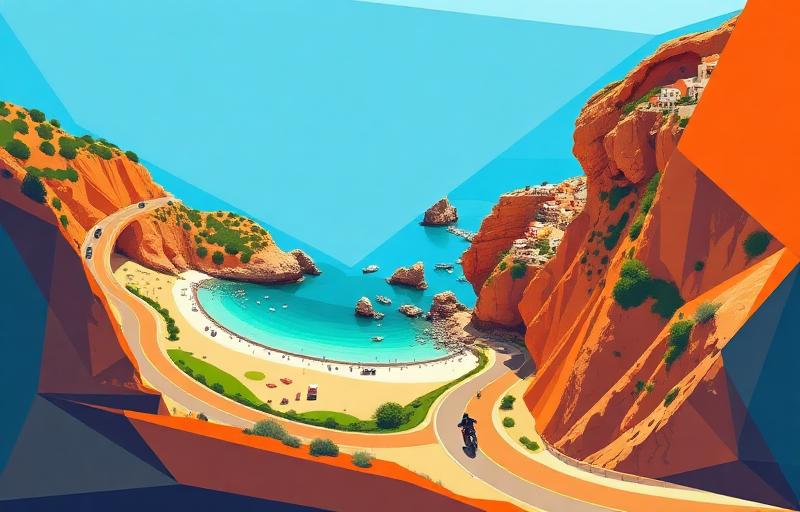
About This Route
The Costa Brava coastal road winds through Spain's rugged northeastern coast, offering stunning views of hidden coves, medieval villages, and the sparkling Mediterranean. From Blanes to the French border, this route combines easy riding with incredible scenery.
Route plan
- Blanes to Tossa de MarLeave the larger resorts behind and use the GI-682 toward Tossa. Urban sections and beach traffic make this a warm-up rather than the highlight.
- Tossa to Sant Feliu de GuíxolsThis 21 km stretch is the essential Costa Brava ride: repeated bends above rocky coves, frequent viewpoints and almost constant changes of elevation.
- Sant Feliu to the central coastContinue north using the C-31 and local connectors for Palamós, Calella de Palafrugell or Begur. This part mixes scenic detours with roundabouts and town traffic.
- Roses to CadaquésFinish with the GI-614 across the exposed Cap de Creus landscape. Wind is often stronger here, and the return journey adds more time than the map first suggests.
What the road is really like
There is no single uninterrupted cliff road from Blanes to the French border. The standout riding is the GI-682 between Tossa and Sant Feliu; farther north, worthwhile coastal spurs are linked by busier inland roads and towns. Knowing that in advance prevents a scenic 190 km plan from becoming a frustrating crawl through resorts.
The GI-682 has good sight lines in places, but viewpoints, cyclists and beach access create unpredictable stops. Cap de Creus feels more open and windswept, with fewer trees and stronger crosswinds. Neither section is difficult at a touring pace, though holiday traffic can raise the workload considerably.
Planning the day
For a one-day ride, prioritise Tossa–Sant Feliu and one northern section rather than trying to visit every coastal town. Start before 09:00, avoid summer weekends and park once when exploring Tossa or Cadaqués.
Fuel is straightforward in the larger towns, but queues and heat become the practical problem in July and August. Spring and autumn bring quieter roads; winter can be excellent on dry days, though exposed Cap de Creus remains windy.
Fuel, food and stops
Reliable fuel options along or near the route include Blanes, Roses. Top up before any long climb — pumps in mountain villages can be closed at lunch or on Sundays.
For food and coffee, Tossa de Mar, Calella de Palafrugell are solid stops. Aim for a proper sit-down lunch rather than a vending-machine snack — the locals eat well in this region.
⚠️ Safety and hazards to watch for
Specific hazards on this route include: Cyclists; Beach traffic.
- Tourist traffic in summer
- Narrow village sections
- Coastal towns and viewpoints are congested in July–August; best ridden on a weekday morning — check current conditions.
Who this route suits
Costa Brava Coastal Twisties works especially well for photographers and slow-tour riders chasing scenery, adventure bike riders who don't mind the occasional rough patch. Recommended bike types are Touring, Adventure, but realistically anything in good mechanical condition with decent tyres will do the job — the road matters more than the badge on the tank.
Insider tips
- Stop at Tossa de Mar for lunch
- Visit Cadaqués and Dalí Museum
- Avoid August crowds