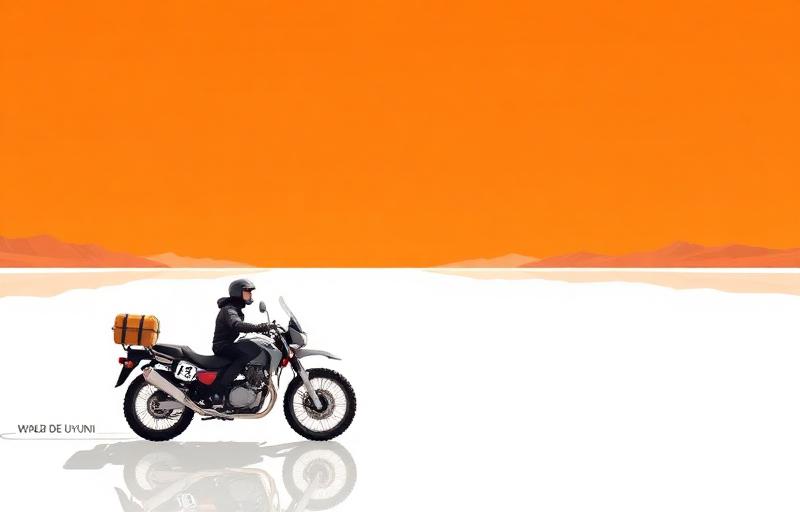
About This Route
Ride across the world's largest salt flat—surreal white horizon.
Why ride Salar de Uyuni Crossing
Salar de Uyuni Crossing sits in Bolivia, Bolivia, and earns its place on this guide for a simple reason: it gives riders something most roads can't — scenery that genuinely makes you stop the bike, with a rhythm that suits a relaxed touring pace.
Across roughly 80 kilometres of mixed, you'll get a real feel for what riding in this corner of Bolivia is about. It's not the longest route in the region and it isn't trying to be — it's a focused, high-quality stretch that rewards riders who take their time.
What the riding actually feels like
On a medium-rated road like this one, you'll want to be on your game but not on edge. Expect a mix of flowing curves, the odd tight hairpin, and short sections where the surface or traffic forces you to think. Solid intermediate riders with some touring miles under their belt will love it.
Read the road first, then commit. The combination of surface, sightlines and traffic on this route rewards a smooth, relaxed pace far more than aggressive corner entries. The route's twistiness rating of 3/5 and scenic rating of 5/5 give a fair indication of where to focus: more on letting the landscape unfold than on chasing apex after apex.
Best time of year to ride
The honest window is May–November. In practical terms, this route is at its peak in summer, when the passes are fully open and you have long evenings to ride out the day. If you only have a narrow weather window, aim for a weekday rather than a weekend — you'll share the road with far fewer cars and tour buses, and the popular pull-offs won't be jammed.
Fuel, food and stops
Reliable fuel options along or near the route include Uyuni. Top up before any long climb — pumps in mountain villages can be closed at lunch or on Sundays.
For food and coffee, Uyuni are solid stops. Aim for a proper sit-down lunch rather than a vending-machine snack — the locals eat well in this region.
⚠️ Safety and hazards to watch for
Specific hazards on this route include: Getting lost; Salt damage.
- No landmarks
- Salt corrosive
- The salt flat floods and becomes impassable in the wet season (roughly Dec–March); the surface is trackless with no landmarks (GPS required), sits at ~3,660 m, corrodes the bike (wash it after), and has soft/wet patches near the edges — check current conditions.
Who this route suits
Salar de Uyuni Crossing works especially well for photographers and slow-tour riders chasing scenery, adventure bike riders who don't mind the occasional rough patch. Recommended bike types are Adventure, Dual-Sport, but realistically anything in good mechanical condition with decent tyres will do the job — the road matters more than the badge on the tank.
Insider tips
- Dry season essential
- Navigation tricky
- Surreal experience